I recently ran my first and second 5Ks, and I tracked the most recent run using the latest wearables from Google, Samsung, and Garmin. The Pixel Watch 5 and Galaxy Watch 9 just hit the market, while the Garmin Cirqa is still pretty new.
Two of these wearables are traditional smartwatches, while one is a screenless fitness tracker. However, fitness tracking is a primary function of these devices, so I wanted to compare how they perform one of my most-used functions, especially now that I'm running more often.
Running the 5K
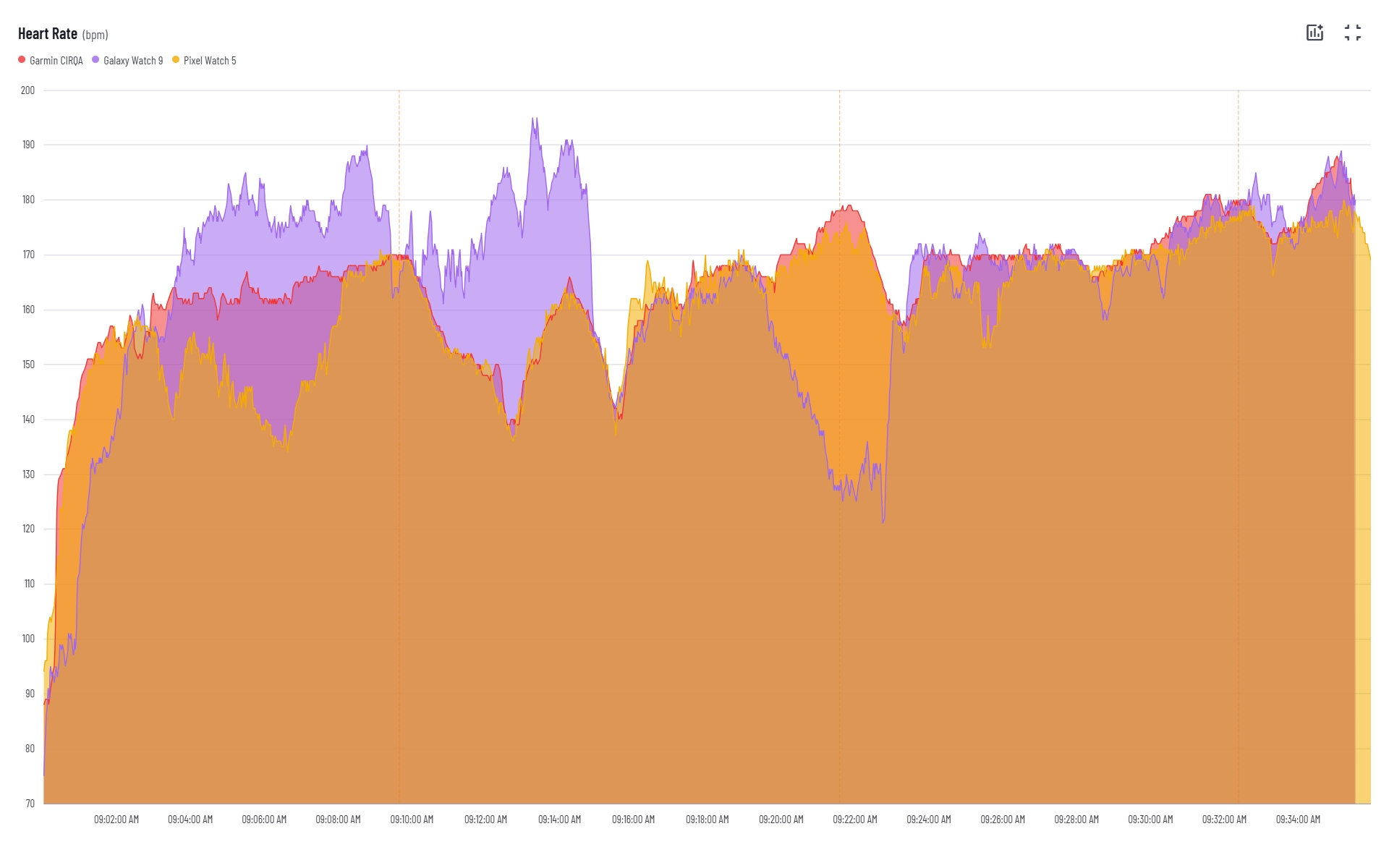
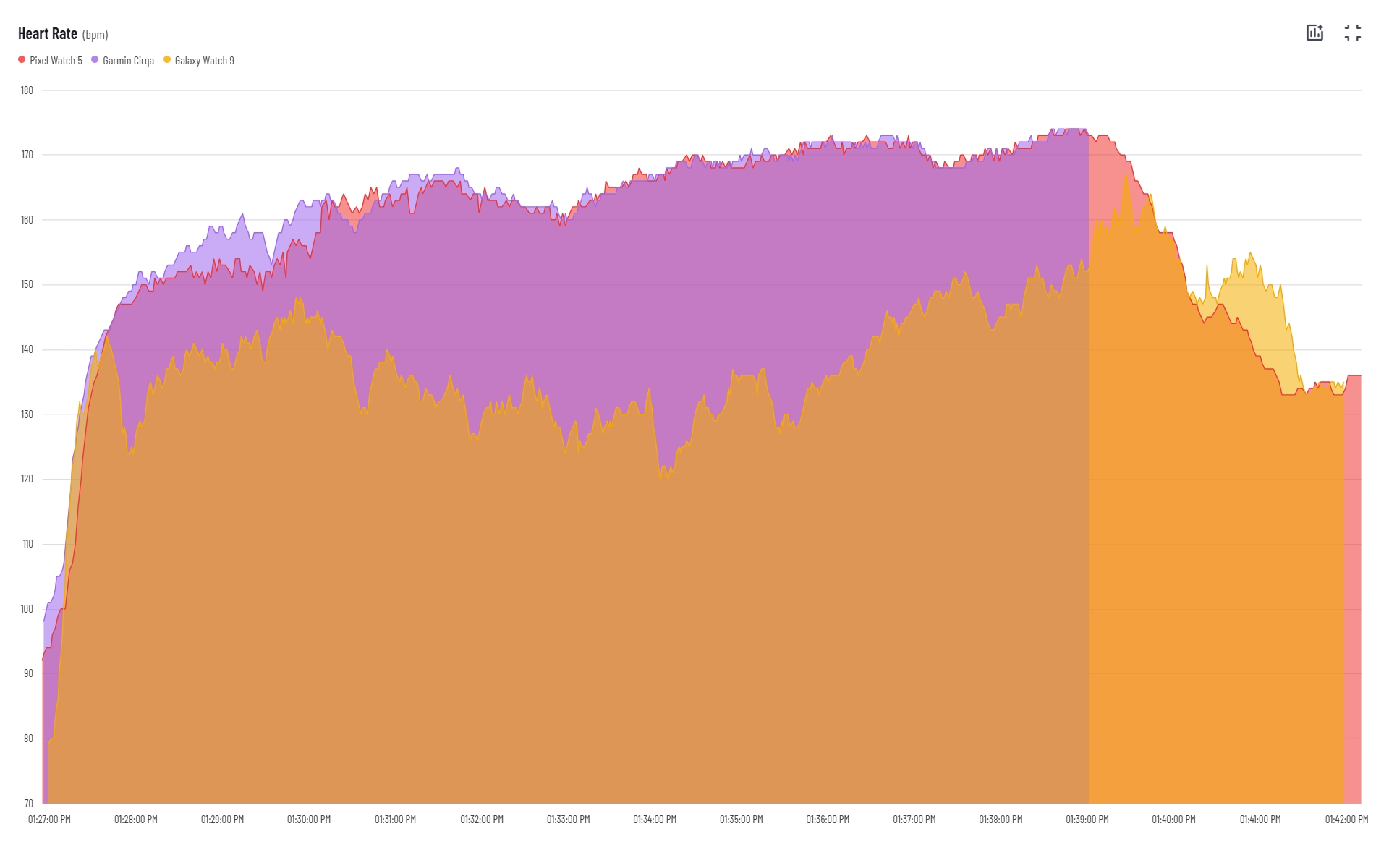
Last weekend, I ran the Emerald City 5K, which was just over 5 kilometers (3.1 miles). Each device measured my heart rate, but you can see from the chart below that there were some interesting deviations from the Galaxy Watch 9.
The Samsung watch took nearly four minutes to catch up to the Cirqa and Pixel Watch, only to continue rising well above the other two wearables for more than 10 minutes. The race had just started, and I know my heart rate wasn't so elevated right off the bat.
After about four minutes, the Cirqa and Pixel Watch 5 also diverged, with the latter dropping to about 135 bpm while the former remained relatively steady. The Pixel Watch eventually catches up, and they remain pretty much in sync for much of the run. That is, until the end, when it fell just below the Galaxy Watch 9 and Garmin Cirqa. At this point, I was "sprinting" (and I use that term loosely) to the finish line, so I know my heart rate was elevated.
I intended to record GPS data during the run, but for some odd reason, the Pixel Watch 5 did not track the route while the Galaxy Watch 9 and Garmin Cirqa (via my phone) did. I can only chalk it up to the Pixel Watch not properly connecting to GPS before the run started.
Still, you can see how the Galaxy Watch and Garmin Cirqa compare with the actual 5K route, marked in brown in the images below. Even though the Cirqa (blue) was connected to my phone for GPS data, it deviated quite a bit from the actual route, showing that I ran on the grass toward the beginning even though I remained on the pathway. It was also quite a bit off at the midpoint when I made a U-turn to head back to run the second half of the race.
Meanwhile, the Galaxy Watch 9 (orange) did surprisingly well throughout the run, pinpointing my position more accurately.
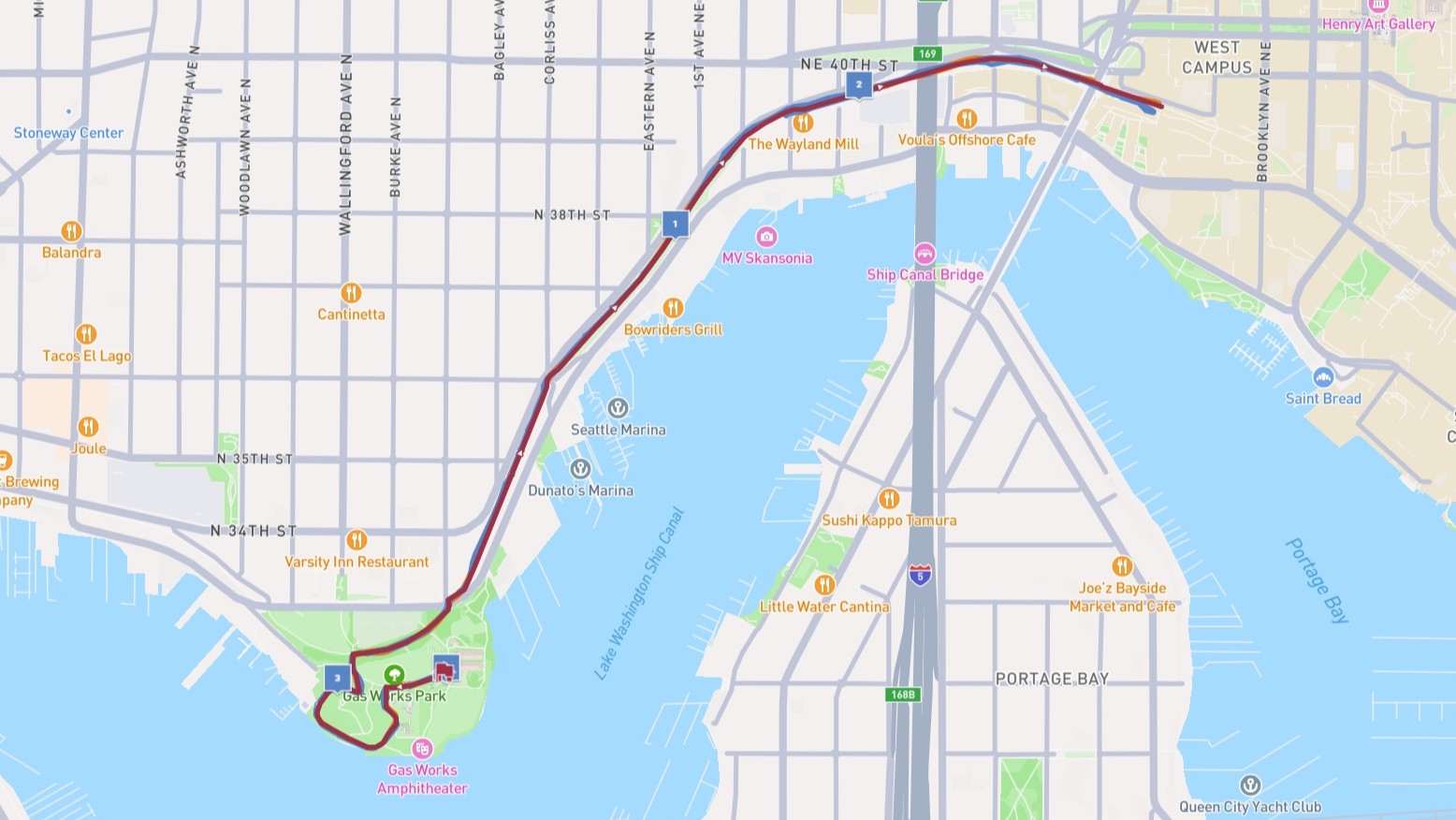
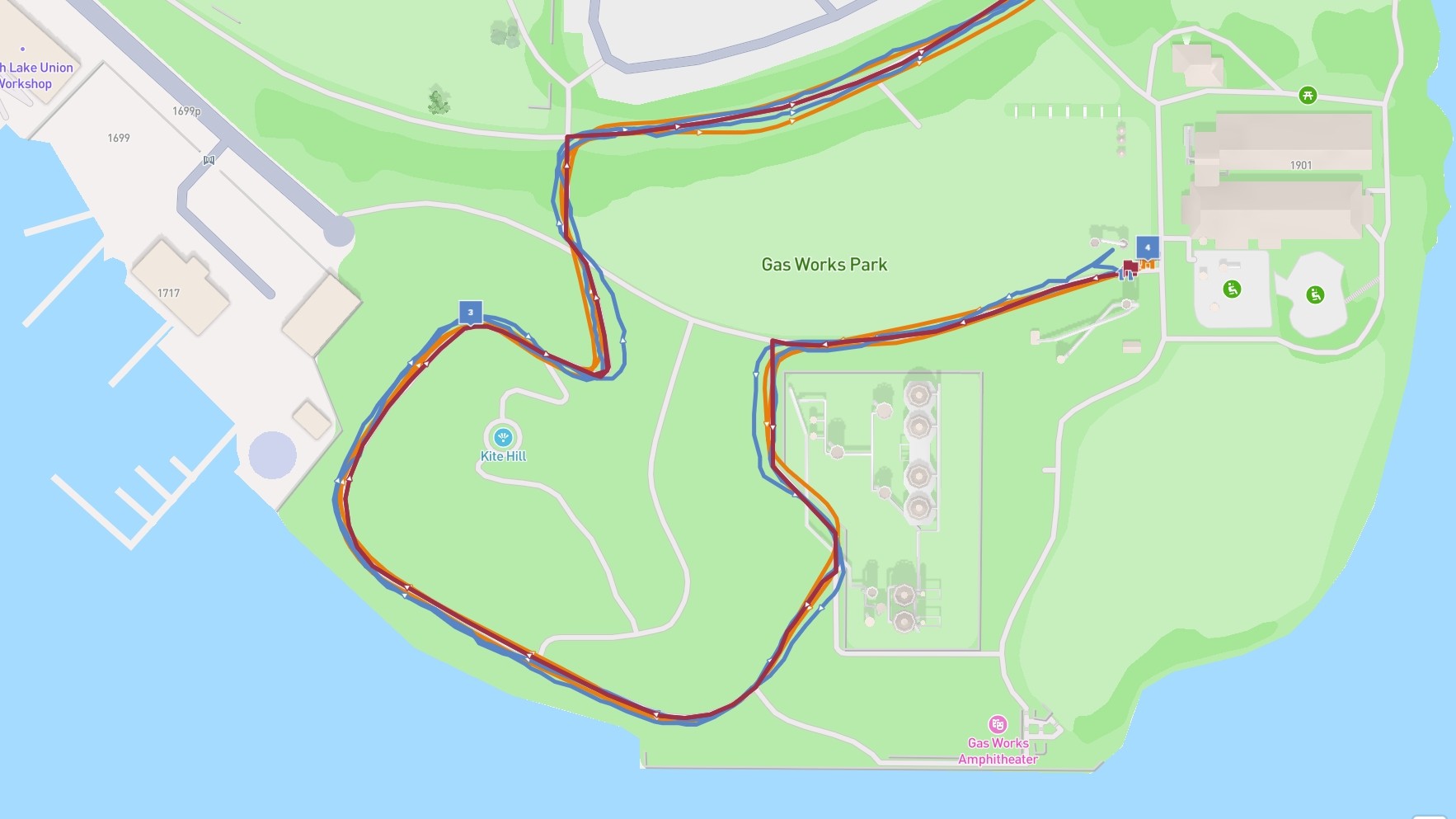
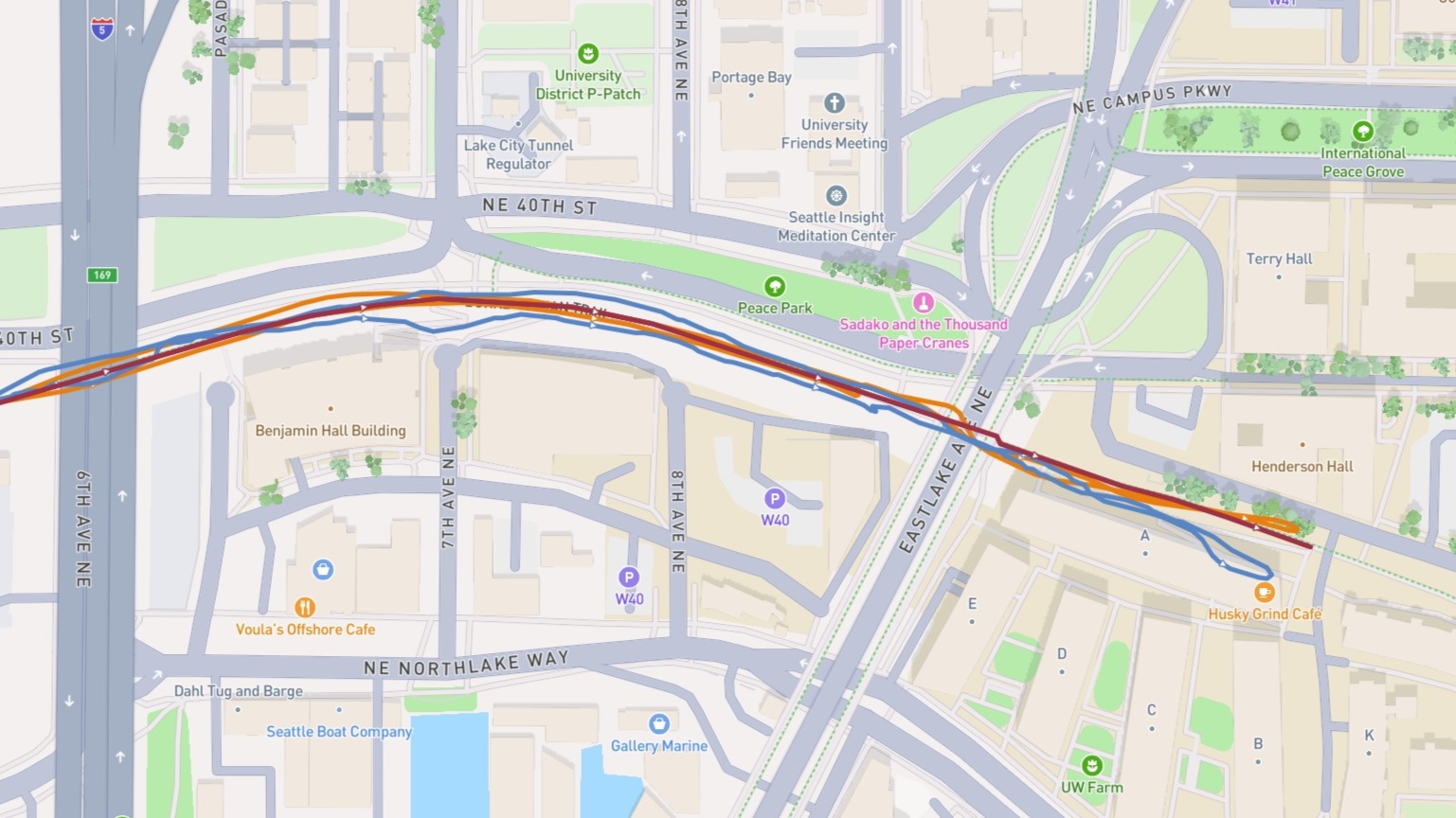
The Galaxy Watch 9 was also the closest to measuring the actual route distance, which was 3.146 miles, according to the official website. The Watch 9 logged 3.15 miles, the Pixel Watch 3.19 miles, and the Garmin Cirqa (via my phone) 3.29 miles. This tells me that, at least, there should be nothing wrong with the Pixel Watch 5's positioning, despite the lack of actual map data.
Also, perhaps the Galaxy Flip 8 isn't the best for connected GPS data, given the Garmin Cirqa's numbers and map data.
Getting in your steps
In addition to running a 5K, I figured I would also walk 5,000 steps and track it with each device to see which is more accurate. It's nearly 3 miles, so it's almost like walking a 5K. During the walk, I tracked my steps using a manual counter in an app, although there is a ~5-step error.
You can check out the results from that walk below. As you can see, the Pixel Watch 5 was pretty spot-on at the halfway point, whereas the Galaxy Watch 9 was a bit ahead by just under 40 steps. The Garmin Cirqa doesn't show steps while still tracking, so I couldn't get a midpoint figure.
Steps | Pixel Watch 5 | Galaxy Watch 9 | Cirqa |
|---|---|---|---|
2,500 | 2,500 | 2,536 | ---- |
5,000 | 5,027 | 5,079 | 5,012 |
Unsurprisingly, the Pixel Watch 5 did better at tracking the entire 5,000-step walk, as it was over by just 26 steps. The Galaxy Watch 9 didn't do too badly, still managing to be over by less than 100 steps, which is a win in my book. However, the Garmin Cirqa beat out both and was over by just 12 steps.
Another run?
In addition to running the 5K, I tracked a second, shorter run. I also monitored my heart rate during that 5,000-step walk.
During the run, the Pixel Watch 5 and Garmin Cirqa were largely in sync. However, the Galaxy Watch 9 started off strong for about one minute before logging much lower heart rate data throughout the 12-minute run.
Note: I ended the run on the Garmin Cirqa prematurely once I began my cooldown, which is why the data suddenly stops.
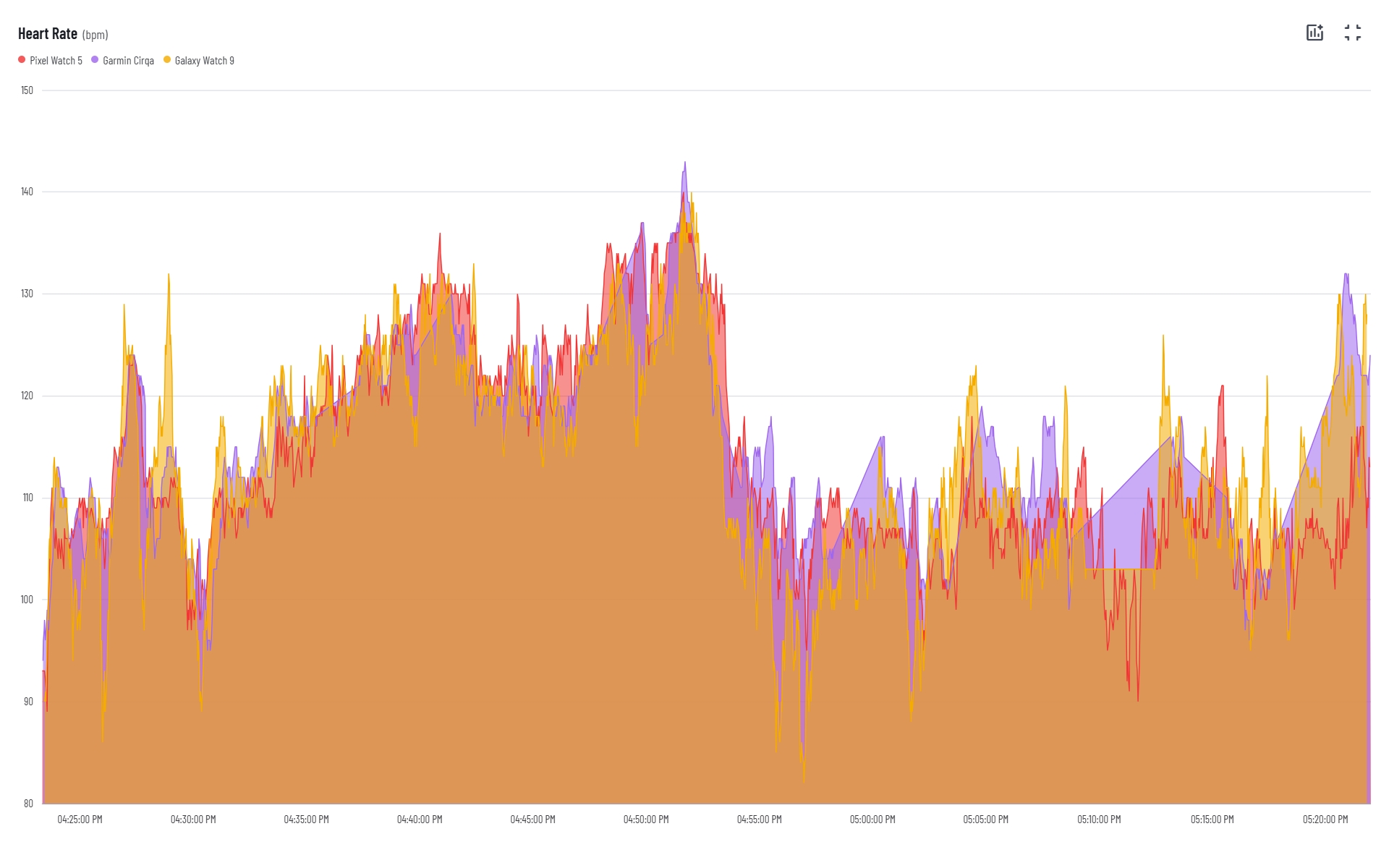
As for the walk, all three devices were within the same ballpark, which wasn't much of a surprise as it was a much lower intensity activity with less dynamic movement and fewer reasons for sudden jumps or dips in heart rate.
That said, the Galaxy Watch 9 was more consistently slightly lower than the other two devices. Toward the end, it was the Pixel Watch 5 that dropped below the other devices.
The data shows some interesting-looking straight-line jumps from the Garmin and later in the Galaxy Watch, although I think this was just an error in how the data is bring presented.
Verdict
If you want a low-key fitness tracker and don't necessarily need GPS (or can rely on your phone for it), then I think the Garmin Cirqa is a good option. It's lightweight, does surprisingly well with automatic workout tracking, tracks steps pretty accurately, and you can wear it on your arm, which is generally a preferred position for fitness wearables (second to a chest strap).
However, if you need a more fully functioning smartwatch experience, I am leaning towards the Pixel Watch 5. Both it and the Galaxy Watch log distance equally well, and despite not providing map data for my recent runs, the Pixel Watch 5 heart rate data feels more accurate and consistent, while the Galaxy Watch 9 tends to under- or overestimate your heart rate. It also tracks your steps more accurately and retains more of the heart rate data from automatically detected workouts.
That's not to say the Galaxy Watch 9 is a bad fitness watch; I enjoy how lightweight it is and its ability to map my running routes more consistently. But so far in my testing, I much prefer the Pixel Watch 5.

Tidak ada komentar:
Posting Komentar